Musa Orinoco
From Bananas Wiki
| Revision as of 16:42, 19 March 2007 (edit) Theflyingdutchman-658 (Talk | contribs) (→Description) ← Previous diff |
Revision as of 13:54, 20 March 2007 (edit) MediaHound (Talk | contribs) (→Members Growing This Banana) Next diff → |
||
| Line 66: | Line 66: | ||
| ===Members Growing This Banana=== | ===Members Growing This Banana=== | ||
| <googlemap lat="29.840644" lon="-26.015625"> | <googlemap lat="29.840644" lon="-26.015625"> | ||
| + | 26.063414912034293, -80.25358263521576, [[User:MediaHound]] | ||
| </googlemap> | </googlemap> | ||
Revision as of 13:54, 20 March 2007
Contents |
Cultivar Name
Synonyms
Pictures
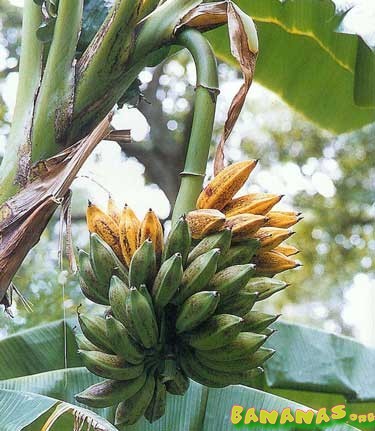
(credit the flying dutchman)
Description
This is the most commonly grown banana in South Florida. The 'Orinoco' is a solid green banana that grows to about 16 feet. If it is crowded it can achieve 20 feet. The fruit is about 8 to 10 inches long and of a angular form. It is quite thick, up to 2 inches and tapered at the tip. There is very little curvature to the fruit. The fruit can ripen on the plant without splitting. When ripe the fruit is very delicious. The fruit is often cooked when green either fried or sometimes boiled. The 'Orinoco' is a hardy plant and withstands cold temperatures well. It stands up to winds well but must be supported when carrying large heads of fruit. Their fruit is sometimes called 'Donkey bananas'
Origin
- Date realized in trade -
Usage
Flowering
- Time To Bloom -
- Time To Harvest -
Cultivation
- Mature Height -
- Survival Zone -
- Fruiting Zone -
- Cold Hardiness -
- Wind -
- Sun -
- Taste Description -
- Personal Notes -
- Growth tips -
Known Afflictions
- Pests -
- Susceptible Diseases -
- Resistant Diseases -
Research Notes
- Links to useful discussion threads in the forum:
- Typical Price Range -
Members Growing This Banana
<googlemap lat="29.840644" lon="-26.015625"> 26.063414912034293, -80.25358263521576, User:MediaHound </googlemap>
External
- Links
- (Links to other useful pages on the web that mention this banana. Example: International Banana Society)
- Sources
