 12-29-2011, 08:28 PM
|
#12 (permalink)
|
Location: Penticton, BC, Okanagan Valley, Canada
Zone: Hardiness Zone 6
Name: Olaf
Join Date: Apr 2010
Posts: 1,705
Said "Thanks" 2,050 Times
Was
Thanked 2,012 Times in 876 Posts
|
 Re: how to use planter bench
Quote:
Originally Posted by TrailGaiter

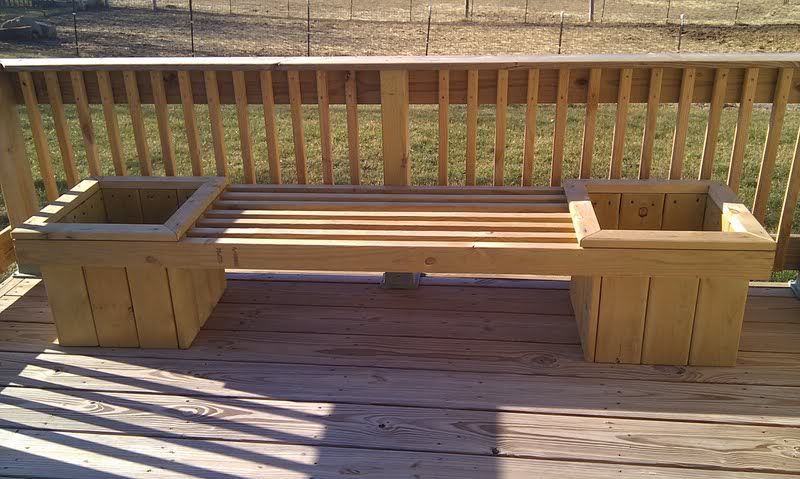
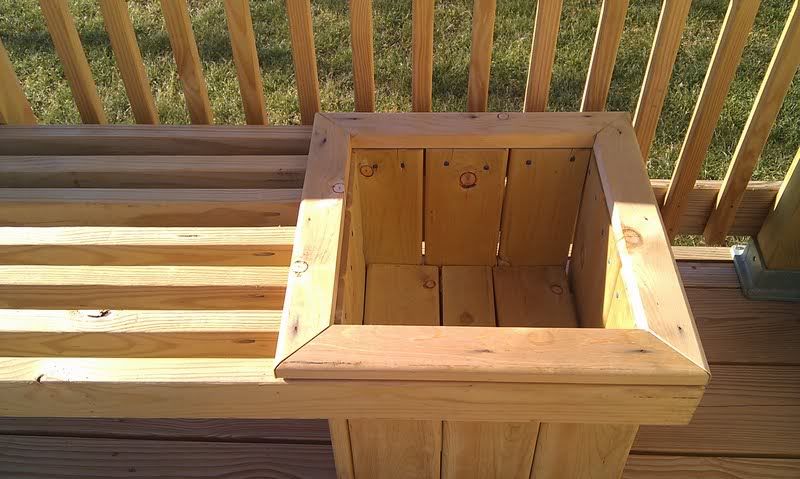
My son and his grandfather built this for me. It came towards the end of summer, so I didn't plant anything in it this year, but I'm itching to do so in the spring! I want to make this last as long as I can...it's made with treated wood, but I still want to protect those boxes somehow. I know I could put pots in them, but I would much rather plant within the boxes, I just think it would look nicer (round pot in a square hole? Nah...)
Is there anything I can coat the inside with? My hubby wondered about tar (like we've used to seal water tanks with...roofing tar...but would need to drill drainage holes) or I also wondered about that spray-in bedliner stuff for trucks. Or just leave it...or add a second wall of plywood...I don't know.
Hoped someone here would have some suggestions! I love this thing, and want to take care of it, but still USE it!
 |
Hi Angie,
that is a beautiful piece of work and well worth preserving and for that reason ruining it with tar is out.
(With apologies to your husband)
Square pots are hard to find (I know, because I am looking all over for them) and if you do find them as
Paul suggested, you would have to be awfully lucky to find them in the right size.
Here is what I would do:
Buy a quart of Flecto Varathane Clear Satin and paint the inside of the planter boxes. Three coats
and the wood will be protected for good. It will alter the colouration of the wood only minimally. After you
have done that, you may chose to paint the rest of the bench too. 
Oh yes, for best results you should apply the next coat within 24 hrs before the previous one. That will
allow the coats to fuse together. I usually do these coats in the evening,- next morning - next evening.
You can probably also do it within 4 to 6 hrs., so long as the previous coat is dry to light touch.
However, there is the other problem of wood shrinkage, as it dries out and the gaps between the vertical
boards will widen. Accordingly you will have to provide some form of stripping or lining to cover the
gap. For the bottom I would suggest a sheet of fly screen on top of a few rocks, to provide positive drainage.
The rising joints you can cover with strips of fly screen or plastic or stuff them with any kind of caulking
material, including old rags or fiber glass insulation or whatever you have handy, and which can be
squeezed in there.
Good Luck,
Olaf
__________________
The reason I joined this forum was to share experiences,
my own and those of others and to learn from them.
|

|


|