
|
|
|
Welcome to the Bananas.org forums. You're currently viewing our message boards as a guest which gives you limited access to participate in discussions and access our other features such as our wiki and photo gallery. By joining our community, you'll have access to post topics, communicate privately with other members (PM), respond to polls, upload photos, and access many other special features. Registration is fast and simple, so please join our community today! If you have any problems with the registration process or your account login, please contact us. |
|
|||||||
| Register | Photo Gallery | Wiki | Map | Today's Posts | Search |
| Other Plants Discussion of all other types of plants besides bananas. |
 Members currently in the chatroom: 0
|
|
 |
The most chatters online in one day was 17, 09-06-2009. No one is currently using the chat. |

 Email this Page Email this Page
|
|
|
LinkBack | Thread Tools |
 07-28-2011, 02:43 AM
|
#1 (permalink) |
|
un-Retired

Location: Vista, CA
Zone: USDA 10b
Name: Richard
Join Date: Jan 2008
Posts: 9,674
BananaBucks
: 994,995
Feedback: 9 / 100%
Said "Thanks" 3,636 Times
Was
Thanked 12,537 Times in 4,719 Posts
Said "Welcome to Bananas" 1,685 Times
|
 Hylocereus ocamponis (a dragon fruit species)
From Stephen Facciola's famous book "Cornucopia II: A Source Book of Edible Plants" (1998 Kampong Publications), p.64
Hylocereus ocamponis - Pitahaya roja. The skin as well as the sweet pulp of the fruit are a wine-red color. Usually eaten out of hand. Also grown as an ornamental hedge plant. Central America to Columbia.From Julia Morton's equally famous publication "Fruits of Warm Climates" (1987 Florida Flair Books), p.348 H. ocamponis [Britt. & Rose] (syn. Cereus ocamponis Salm-Dyck) is a similar cactus [to H. undatus] cultivated in Guatemala, Colombia, Bolivia and Puerto Rico. It has more deeply undulate wings bordered with brown, and longer spines. The fruit is wine-red outside and inside and the pulp is sweet.Facciola also references these two books, of which I have yet to obtain a copy:
I obtained two rootings from K & L Cactus in 2007. The plant I obtained meets the description given by J. Morton and was also given a positive id by Michael Buckner, a local authority on Cacti of Central America. So I have a strong belief I have the correct plant, but the jury is still out until I can get it to fruit and/or I can get verification from a few other cacti experts. It certainly has more robust spines than H. undatus, H. guatemalensis, etc. and a blueish hue on older pods -- which turns out to be a dander-like oxidation. The pods have the appearance of more upright cactus forms, yet they vine, twist and turn like other Hylocereus species. The pods however can be quite long - 6 feet is not unusual. The cross-section diameter is typically 3 inches. I have distributed cuttings to a few collectors including Edgar Valdivia, and more recently Seng Hua of Mira Mesa CA. My collection is putting out buds again and one has bloomed tonight. This is the second year of budding and thus there is a good chance I will get fruit for the 1st time. Here is a short photo summary of the plant over the last couple years:   (no flash)  (flash)  (view of sepals) 
__________________
Back in business at plantsthatproduce.com |

|


|
| Said thanks: |
 | Are you a banana plant enthusiast? Then we hope you will join the community. You will gain access to post, create threads, private message, upload images, join groups and more. |
|
Sponsors |
|
07-28-2011, 11:54 AM
|
#2 (permalink) |

Location: Dunnellon, Florida
Zone: 9b
Name: Noah
Join Date: Jun 2011
Posts: 1,064
BananaBucks
: 48,262
Feedback: 1 / 100%
Said "Thanks" 2,207 Times
Was
Thanked 847 Times in 514 Posts
Said "Welcome to Bananas" 437 Times
|
Re: Hylocereus ocamponis (a dragon fruit species)
Thanks, we are looking at starting a few from seed if we ever find any. Have you tried starting with seed? I guess with the plant that wouldn't be necessary.
Waiting for more pics. Thanks
__________________
"What this country needs is dirtier fingernails and cleaner minds." |
|
|
|
|
07-28-2011, 06:45 PM
|
#3 (permalink) | |
|
un-Retired
Location: Vista, CA
Zone: USDA 10b
Name: Richard
Join Date: Jan 2008
Posts: 9,674
BananaBucks
: 994,995
Feedback: 9 / 100%
Said "Thanks" 3,636 Times
Was
Thanked 12,537 Times in 4,719 Posts
Said "Welcome to Bananas" 1,685 Times
|
Re: Hylocereus ocamponis (a dragon fruit species)
Quote:
__________________
Back in business at plantsthatproduce.com |
|
|
|
|
| Said thanks: |
|
08-02-2011, 02:46 PM
|
#4 (permalink) |
|
Location: Dunnellon, Florida
Zone: 9b
Name: Noah
Join Date: Jun 2011
Posts: 1,064
BananaBucks
: 48,262
Feedback: 1 / 100%
Said "Thanks" 2,207 Times
Was
Thanked 847 Times in 514 Posts
Said "Welcome to Bananas" 437 Times
|
Re: Hylocereus ocamponis (a dragon fruit species)
With most things there is a gamble. Can you let us know what is the ease of growing from seed and maybe an idea of how long to fruit. We relize that some may take longer than others but an average would be okay. Will be buying from reputable dealer in Hawaii and feel confident. Thanks, your input is greatly appreciated.
__________________
"What this country needs is dirtier fingernails and cleaner minds." |
|
|
|
|
10-10-2011, 01:55 PM
|
#5 (permalink) |
|
un-Retired
Location: Vista, CA
Zone: USDA 10b
Name: Richard
Join Date: Jan 2008
Posts: 9,674
BananaBucks
: 994,995
Feedback: 9 / 100%
Said "Thanks" 3,636 Times
Was
Thanked 12,537 Times in 4,719 Posts
Said "Welcome to Bananas" 1,685 Times
|
Re: Hylocereus ocamponis (a dragon fruit species)
Here is the fruit of Hylocereus ocamponis. Stephen Facciola got it right when he called the fruit "outstanding". I think the Pitaya Group and the CRFG in general have done themselves a disservice by passing up "the spiny one".
 
__________________
Back in business at plantsthatproduce.com |
|
|
|
| Said thanks: |
|
Sponsors |
|
10-10-2011, 04:00 PM
|
#6 (permalink) |
|
Location: Dunnellon, Florida
Zone: 9b
Name: Noah
Join Date: Jun 2011
Posts: 1,064
BananaBucks
: 48,262
Feedback: 1 / 100%
Said "Thanks" 2,207 Times
Was
Thanked 847 Times in 514 Posts
Said "Welcome to Bananas" 437 Times
|
Re: Hylocereus ocamponis (a dragon fruit species)
The picture makes my mouth water. It looks so delicious, hope we can find some fruit in the store. Thanks
__________________
"What this country needs is dirtier fingernails and cleaner minds." |
|
|
|
|
10-10-2011, 07:50 PM
|
#7 (permalink) | |
|
un-Retired
Location: Vista, CA
Zone: USDA 10b
Name: Richard
Join Date: Jan 2008
Posts: 9,674
BananaBucks
: 994,995
Feedback: 9 / 100%
Said "Thanks" 3,636 Times
Was
Thanked 12,537 Times in 4,719 Posts
Said "Welcome to Bananas" 1,685 Times
|
Re: Hylocereus ocamponis (a dragon fruit species)
Quote:
__________________
Back in business at plantsthatproduce.com |
|
|
|
|
| Said thanks: |
|
05-31-2012, 07:44 PM
|
#8 (permalink) |
|
<div style="font-style: italic;"><div style="font-style: italic;"></div></div>

Location: SFV, California
Zone: USDA zone 10a; Sunset zone 18/19
Name: Andreas
Join Date: Sep 2011
Posts: 2,301
BananaBucks
: 322,943
Feedback: 0 / 0%
Said "Thanks" 1,474 Times
Was
Thanked 2,197 Times in 1,148 Posts
Said "Welcome to Bananas" 236 Times
|
Re: Hylocereus ocamponis (a dragon fruit species)
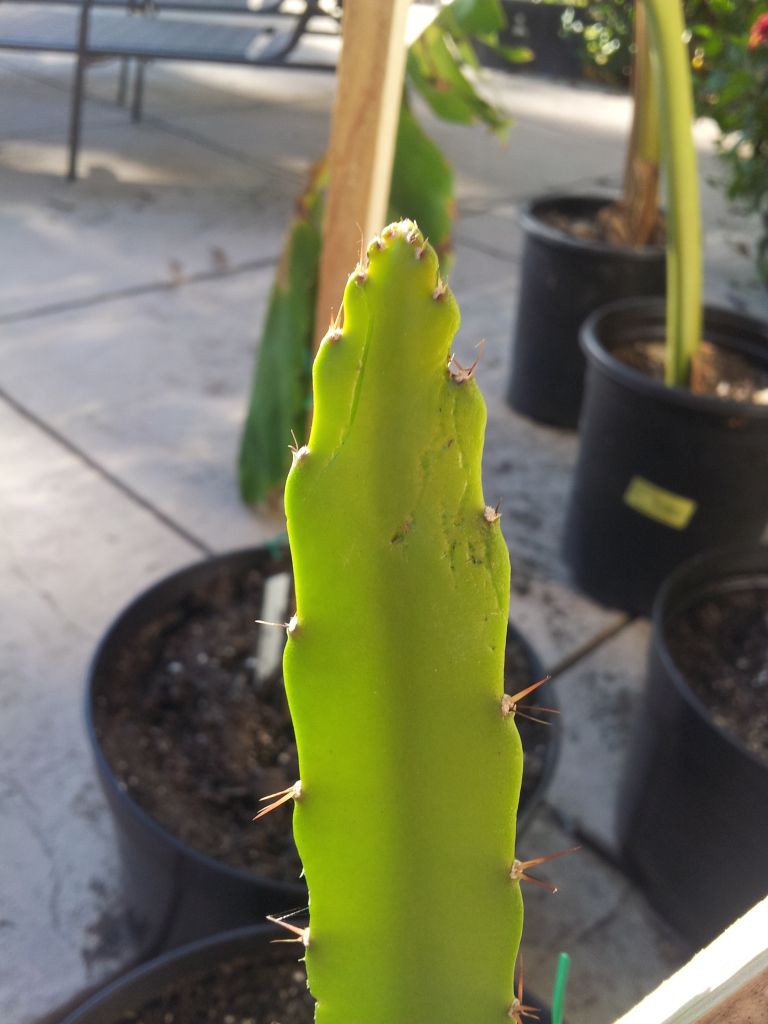
I have one of these courtesy of Richard, and it's rooting right now. Today I just noticed a little bud poking out of one of the nodes...
__________________
"The ultimate goal of farming is not the growing of crops, but the cultivation and perfection of human beings." ~ Masanobu Fukuoka Find me on linktree here as Solarpunk Farmer: https://linktr.ee/solarpunkfarmer |
|
|
|
| Said thanks: |
|
05-31-2012, 10:34 PM
|
#9 (permalink) | |
|
Banned
Location: San Diego
Zone: 9-11
Name: Tony
Join Date: Apr 2008
Posts: 18,429
BananaBucks
: 1,627,822
Feedback: 8 / 100%
Said "Thanks" 3,210 Times
Was
Thanked 20,593 Times in 7,760 Posts
Said "Welcome to Bananas" 2,716 Times
|
Re: Hylocereus ocamponis (a dragon fruit species)
 Quote:
 |
|
|
|
|
|
05-31-2012, 10:43 PM
|
#10 (permalink) |
|
<div style="font-style: italic;"><div style="font-style: italic;"></div></div>
Location: SFV, California
Zone: USDA zone 10a; Sunset zone 18/19
Name: Andreas
Join Date: Sep 2011
Posts: 2,301
BananaBucks
: 322,943
Feedback: 0 / 0%
Said "Thanks" 1,474 Times
Was
Thanked 2,197 Times in 1,148 Posts
Said "Welcome to Bananas" 236 Times
|
Re: Hylocereus ocamponis (a dragon fruit species)
Unfortunately, I have a bad camera. I'll try to get a clear pic tomorrow!
__________________
"The ultimate goal of farming is not the growing of crops, but the cultivation and perfection of human beings." ~ Masanobu Fukuoka Find me on linktree here as Solarpunk Farmer: https://linktr.ee/solarpunkfarmer |
|
|
|
|
06-01-2012, 02:18 PM
|
#11 (permalink) |
|
<div style="font-style: italic;"><div style="font-style: italic;"></div></div>
Location: SFV, California
Zone: USDA zone 10a; Sunset zone 18/19
Name: Andreas
Join Date: Sep 2011
Posts: 2,301
BananaBucks
: 322,943
Feedback: 0 / 0%
Said "Thanks" 1,474 Times
Was
Thanked 2,197 Times in 1,148 Posts
Said "Welcome to Bananas" 236 Times
|
Re: Hylocereus ocamponis (a dragon fruit species)

__________________
"The ultimate goal of farming is not the growing of crops, but the cultivation and perfection of human beings." ~ Masanobu Fukuoka Find me on linktree here as Solarpunk Farmer: https://linktr.ee/solarpunkfarmer |
|
|
|
| Said thanks: |
|
06-11-2012, 07:10 PM
|
#12 (permalink) |
|
<div style="font-style: italic;"><div style="font-style: italic;"></div></div>
Location: SFV, California
Zone: USDA zone 10a; Sunset zone 18/19
Name: Andreas
Join Date: Sep 2011
Posts: 2,301
BananaBucks
: 322,943
Feedback: 0 / 0%
Said "Thanks" 1,474 Times
Was
Thanked 2,197 Times in 1,148 Posts
Said "Welcome to Bananas" 236 Times
|
Re: Hylocereus ocamponis (a dragon fruit species)
The bud is getting a lot bigger. To me, it looks a lot like a flower bud forming.
__________________
"The ultimate goal of farming is not the growing of crops, but the cultivation and perfection of human beings." ~ Masanobu Fukuoka Find me on linktree here as Solarpunk Farmer: https://linktr.ee/solarpunkfarmer |
|
|
|
|
06-13-2012, 03:23 PM
|
#13 (permalink) |
|
<div style="font-style: italic;"><div style="font-style: italic;"></div></div>
Location: SFV, California
Zone: USDA zone 10a; Sunset zone 18/19
Name: Andreas
Join Date: Sep 2011
Posts: 2,301
BananaBucks
: 322,943
Feedback: 0 / 0%
Said "Thanks" 1,474 Times
Was
Thanked 2,197 Times in 1,148 Posts
Said "Welcome to Bananas" 236 Times
|
Re: Hylocereus ocamponis (a dragon fruit species)
Richard, the bud coming off of the cutting you sent me is a flower bud. Should I remove it? It's still in the process of rooting, and I'm not sure if the cutting would be able to support a flower. Also, is this species self-fertile?
__________________
"The ultimate goal of farming is not the growing of crops, but the cultivation and perfection of human beings." ~ Masanobu Fukuoka Find me on linktree here as Solarpunk Farmer: https://linktr.ee/solarpunkfarmer |
|
|
|
|
07-26-2012, 04:38 PM
|
#14 (permalink) |
|
Join Date: Jul 2012
Posts: 54
BananaBucks
: 36,190
Feedback: 0 / 0%
Said "Thanks" 33 Times
Was
Thanked 47 Times in 27 Posts
Said "Welcome to Bananas" 0 Times
|
Re: Hylocereus ocamponis (a dragon fruit species)
|
|
|
|
|
07-26-2012, 07:01 PM
|
#15 (permalink) | |
|
<div style="font-style: italic;"><div style="font-style: italic;"></div></div>
Location: SFV, California
Zone: USDA zone 10a; Sunset zone 18/19
Name: Andreas
Join Date: Sep 2011
Posts: 2,301
BananaBucks
: 322,943
Feedback: 0 / 0%
Said "Thanks" 1,474 Times
Was
Thanked 2,197 Times in 1,148 Posts
Said "Welcome to Bananas" 236 Times
|
Re: Hylocereus ocamponis (a dragon fruit species)
Quote:
__________________
"The ultimate goal of farming is not the growing of crops, but the cultivation and perfection of human beings." ~ Masanobu Fukuoka Find me on linktree here as Solarpunk Farmer: https://linktr.ee/solarpunkfarmer |
|
|
|
|
| Said thanks: |
|
07-27-2012, 04:33 PM
|
#16 (permalink) | |
|
un-Retired
Location: Vista, CA
Zone: USDA 10b
Name: Richard
Join Date: Jan 2008
Posts: 9,674
BananaBucks
: 994,995
Feedback: 9 / 100%
Said "Thanks" 3,636 Times
Was
Thanked 12,537 Times in 4,719 Posts
Said "Welcome to Bananas" 1,685 Times
|
Re: Hylocereus ocamponis (a dragon fruit species)
Quote:

__________________
Back in business at plantsthatproduce.com |
|
|
|
|
| Said thanks: |
| | Are you a banana plant enthusiast? Then we hope you will join the community. You will gain access to post, create threads, private message, upload images, join groups and more. |
|
Sponsors |
|
07-28-2012, 02:12 AM
|
#17 (permalink) |
|
<div style="font-style: italic;"><div style="font-style: italic;"></div></div>
Location: SFV, California
Zone: USDA zone 10a; Sunset zone 18/19
Name: Andreas
Join Date: Sep 2011
Posts: 2,301
BananaBucks
: 322,943
Feedback: 0 / 0%
Said "Thanks" 1,474 Times
Was
Thanked 2,197 Times in 1,148 Posts
Said "Welcome to Bananas" 236 Times
|
Re: Hylocereus ocamponis (a dragon fruit species)
The flower bud already dropped. But now it's sending out new shoots!
__________________
"The ultimate goal of farming is not the growing of crops, but the cultivation and perfection of human beings." ~ Masanobu Fukuoka Find me on linktree here as Solarpunk Farmer: https://linktr.ee/solarpunkfarmer |
|
|
|
|
07-28-2012, 11:29 PM
|
#18 (permalink) | |
|
Join Date: Jul 2012
Posts: 54
BananaBucks
: 36,190
Feedback: 0 / 0%
Said "Thanks" 33 Times
Was
Thanked 47 Times in 27 Posts
Said "Welcome to Bananas" 0 Times
|
Re: Hylocereus ocamponis (a dragon fruit species)
Quote:
Just disappointed, today they fell off |
|
|
|
|
|
07-28-2012, 11:54 PM
|
#19 (permalink) | |
|
un-Retired
Location: Vista, CA
Zone: USDA 10b
Name: Richard
Join Date: Jan 2008
Posts: 9,674
BananaBucks
: 994,995
Feedback: 9 / 100%
Said "Thanks" 3,636 Times
Was
Thanked 12,537 Times in 4,719 Posts
Said "Welcome to Bananas" 1,685 Times
|
Re: Hylocereus ocamponis (a dragon fruit species)
Quote:
__________________
Back in business at plantsthatproduce.com |
|
|
|
|
| Said thanks: |
|
08-27-2012, 07:50 PM
|
#20 (permalink) |
|
<div style="font-style: italic;"><div style="font-style: italic;"></div></div>
Location: SFV, California
Zone: USDA zone 10a; Sunset zone 18/19
Name: Andreas
Join Date: Sep 2011
Posts: 2,301
BananaBucks
: 322,943
Feedback: 0 / 0%
Said "Thanks" 1,474 Times
Was
Thanked 2,197 Times in 1,148 Posts
Said "Welcome to Bananas" 236 Times
|
Re: Hylocereus ocamponis (a dragon fruit species)
__________________
"The ultimate goal of farming is not the growing of crops, but the cultivation and perfection of human beings." ~ Masanobu Fukuoka Find me on linktree here as Solarpunk Farmer: https://linktr.ee/solarpunkfarmer |
|
|
|
| Said thanks: |
|
Sponsors |
|
Email this Page
|
| Currently Active Users Viewing This Thread: 2 (0 members and 2 guests) | |
|
|
|
Similar Threads
|
||||
| Thread | Thread Starter | Forum | Replies | Last Post |
| Dragon Fruit | Mason | Other Plants | 791 | 08-19-2015 04:09 PM |
| Dragon Fruit Blooming | sbl | Other Plants | 4 | 07-09-2014 07:16 AM |
| Dragon fruit | cherokee_greg | Tiki Hut | 3 | 07-14-2010 11:47 AM |
| Dragon Fruit | Worm_Farmer | Other Plants | 11 | 01-19-2009 12:46 PM |
| Dragon Fruit | sunfish | Other Plants | 2 | 06-19-2008 06:04 AM |