|
|
|
Welcome to the Bananas.org forums. You're currently viewing our message boards as a guest which gives you limited access to participate in discussions and access our other features such as our wiki and photo gallery. By joining our community, you'll have access to post topics, communicate privately with other members (PM), respond to polls, upload photos, and access many other special features. Registration is fast and simple, so please join our community today! If you have any problems with the registration process or your account login, please contact us. |
|
|||||||
| Register | Photo Gallery | Wiki | Map | Today's Posts | Search |
| Container Grown Banana Plants This forum is for discussions about growing banana plants in containers. |
 Members currently in the chatroom: 0
|
|
 |
The most chatters online in one day was 17, 09-06-2009. No one is currently using the chat. |

 Email this Page Email this Page
|
|
|
LinkBack | Thread Tools |
 08-14-2013, 08:15 PM
|
#1 (permalink) |
|
Zone: 6b
Join Date: Sep 2012
Posts: 5
BananaBucks
: 5,892
Feedback: 0 / 0%
Said "Thanks" 0 Times
Was
Thanked 9 Times in 1 Post
Said "Welcome to Bananas" 0 Times
|
 Help! Is this cold damage?
I left home for work early this morning and as I walked out the door it was a bit chilly and breezy but I believe it only got down to about 55. Tonight when I got home from work, I checked my banana plants in containers on my front porch, and the leaves were wilted, droopy, and brown/black. The plants are dwarf reds. I didn't think that this would happen this quickly. Are dwarf reds THAT sensitive to the cold? None of my other banana plants outside seem to be affected.
Thanks Kris 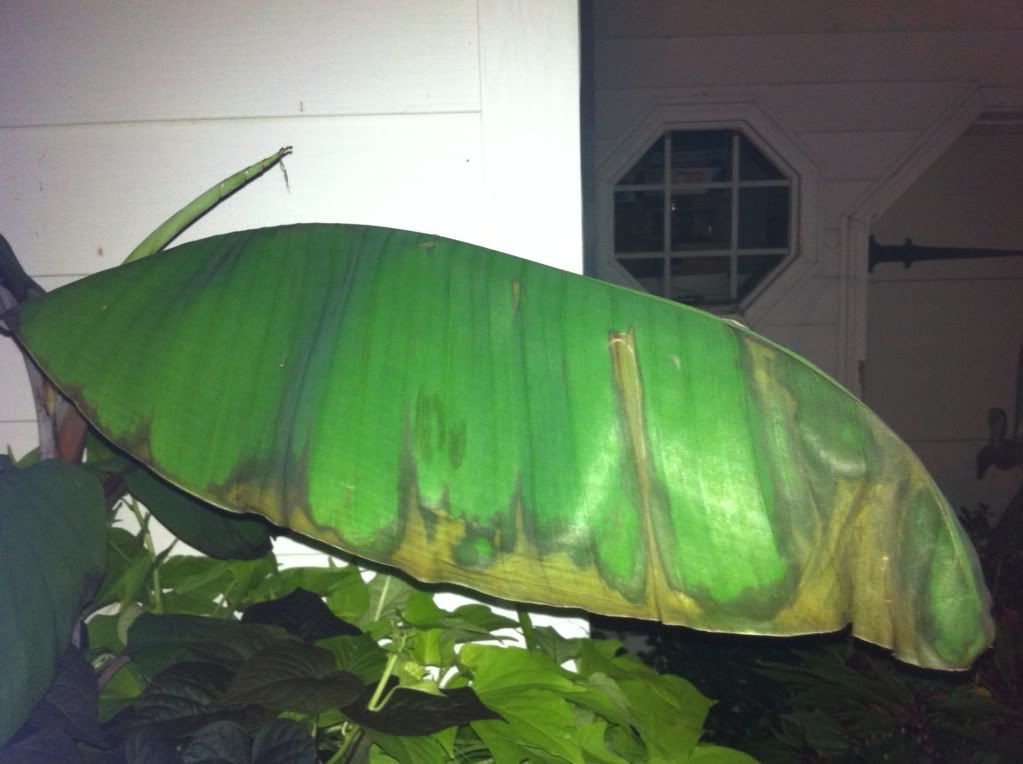 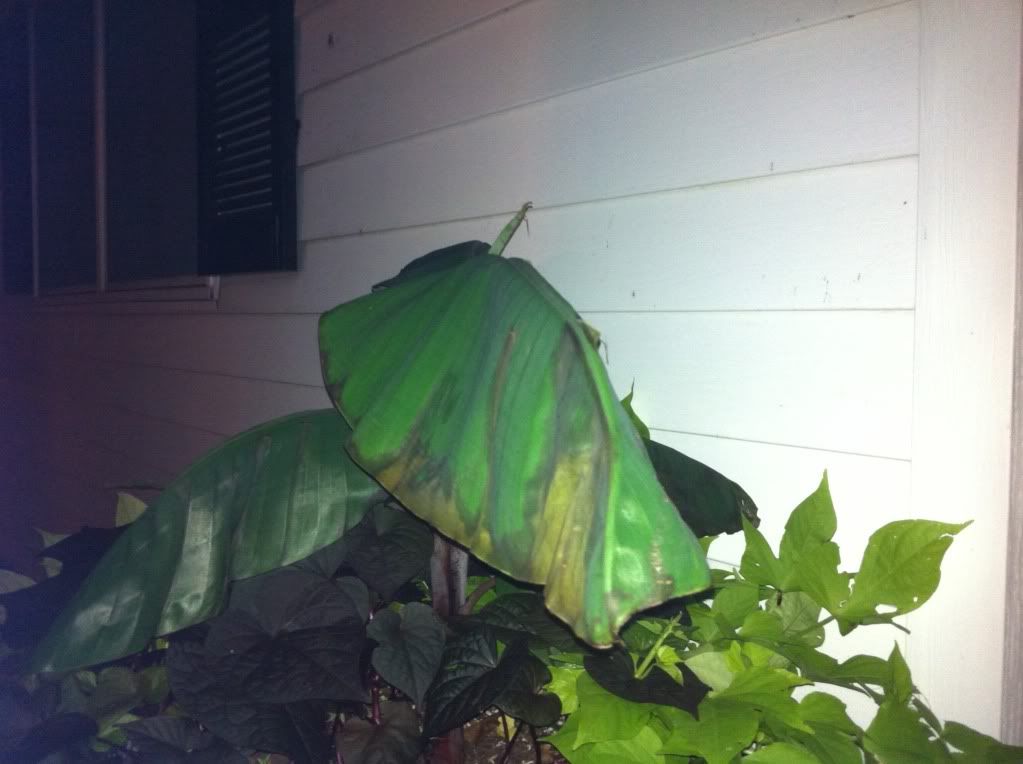 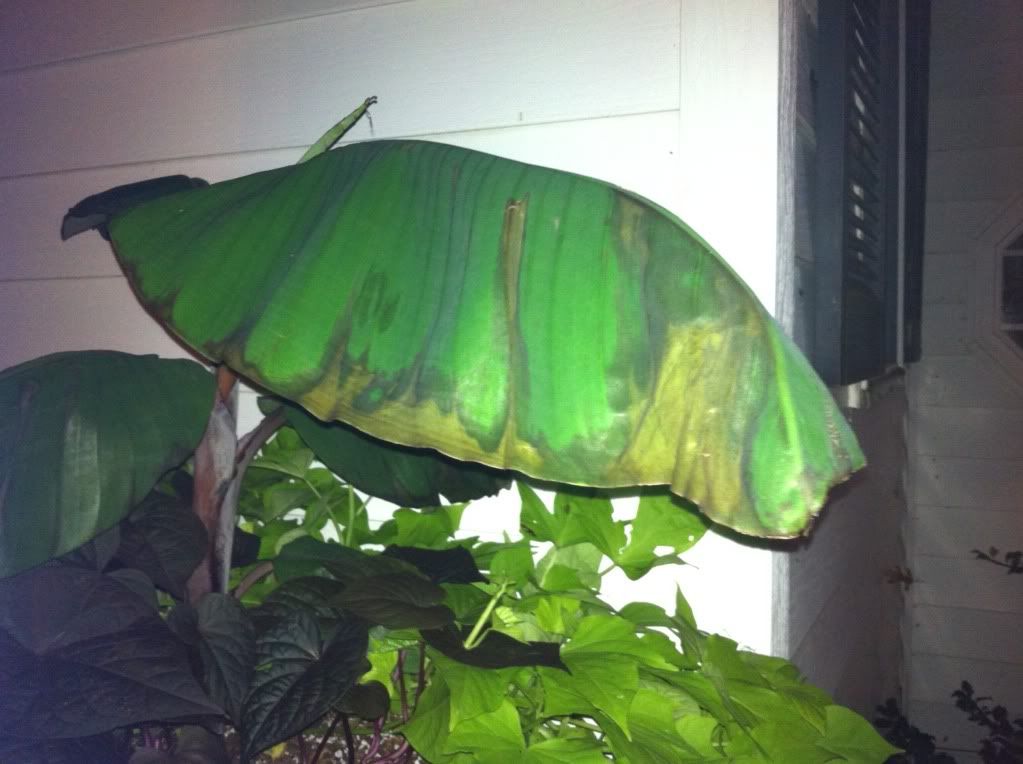 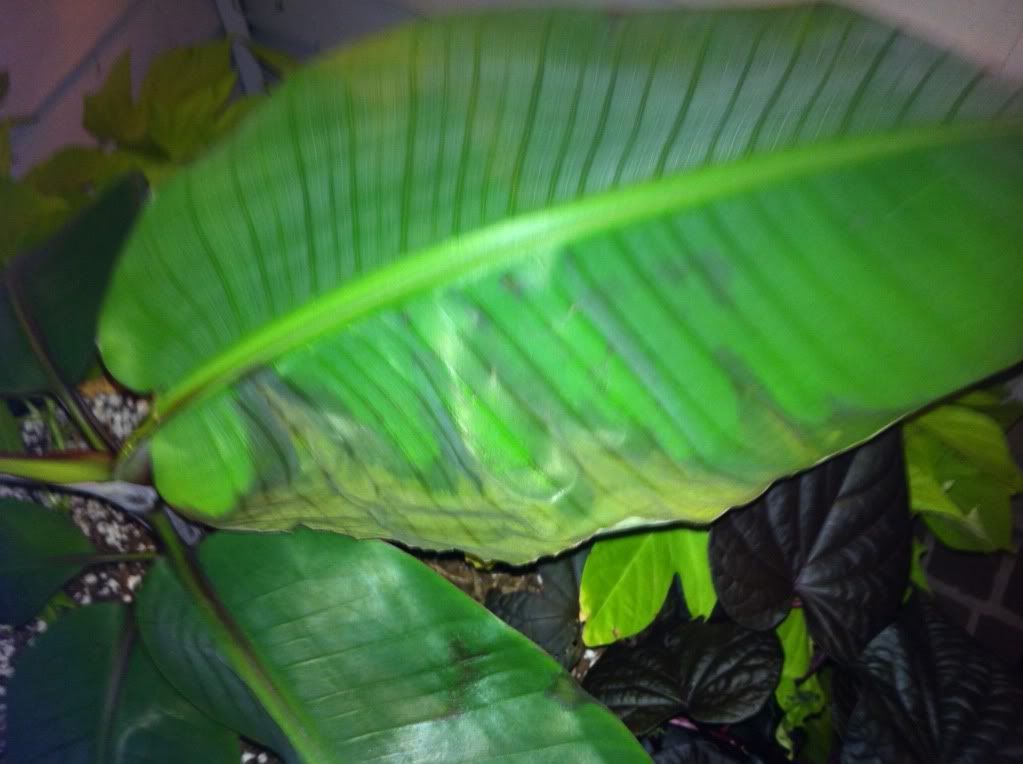 |

|


|
 | Are you a banana plant enthusiast? Then we hope you will join the community. You will gain access to post, create threads, private message, upload images, join groups and more. |
|
Sponsors |
|
08-14-2013, 08:21 PM
|
#2 (permalink) | |
|
Banned
Location: San Diego
Zone: 9-11
Name: Tony
Join Date: Apr 2008
Posts: 18,429
BananaBucks
: 1,628,502
Feedback: 8 / 100%
Said "Thanks" 3,210 Times
Was
Thanked 20,593 Times in 7,760 Posts
Said "Welcome to Bananas" 2,716 Times
|
Re: Help! Is this cold damage?
Quote:
Is this cold damage??? |
|
|
|
|
| Said thanks: |
|
08-15-2013, 08:37 AM
|
#3 (permalink) |
|
Zone: 6b
Join Date: Sep 2012
Posts: 5
BananaBucks
: 5,892
Feedback: 0 / 0%
Said "Thanks" 0 Times
Was
Thanked 9 Times in 1 Post
Said "Welcome to Bananas" 0 Times
|
Re: Help! Is this cold damage?
I'm still puzzled. Someone mentioned to me that maybe it was fertilizer burn. Would that really show up on BOTH plants overnight. The last time I fertilize the one was on Sunday. But I just used miracle gro all purpose at normal or slightly below normal strength. The other plant I haven't fertilized in a couple weeks. I also have other plants in the same containers that don't show any signs of fertilizer burn. Like I said this literally happened overnight.
Kris |
|
|
|
|
08-15-2013, 09:55 AM
|
#4 (permalink) |
|
PURA VIDA!!

Location: close to tampa florida
Join Date: Nov 2011
Posts: 697
BananaBucks
: 61,472
Feedback: 0 / 0%
Said "Thanks" 421 Times
Was
Thanked 469 Times in 286 Posts
Said "Welcome to Bananas" 310 Times
|
Re: Help! Is this cold damage?
I could be slight cold damage..are the outer edges dry and brittle...I happened to me last year on a dwarf red...42 deg wind blowing..outer edges of the leaves became dry and crumbly..but did recover over what seems like forever
|
|
|
|
|
08-15-2013, 10:14 AM
|
#5 (permalink) |
|
Let there be light
 
Location: Makarska, Croatia
Zone: 9
Name: Ante
Join Date: Dec 2008
Posts: 9,161
BananaBucks
: 740,284
Feedback: 10 / 100%
Said "Thanks" 6,509 Times
Was
Thanked 8,385 Times in 3,032 Posts
Said "Welcome to Bananas" 720 Times
|
Re: Help! Is this cold damage?
Sunburn
__________________
https://abnb.me/AXJty518xib |
|
|
|
|
Sponsors |
|
08-15-2013, 10:21 AM
|
#6 (permalink) | |
|
Happy Growing

Location: Beaumont Texas
Zone: 8b, but 9b weather..
Name: Migael / Michael
Join Date: Aug 2009
Posts: 9,493
BananaBucks
: 349,039
Feedback: 45 / 100%
Said "Thanks" 10,447 Times
Was
Thanked 16,443 Times in 5,238 Posts
Said "Welcome to Bananas" 2,318 Times
|
Re: Help! Is this cold damage?
Quote:
__________________
 I'm a Nannerhead :^) |
|
|
|
|
| Said thanks: |
|
08-15-2013, 10:25 AM
|
#7 (permalink) |
|
Zone: 6b
Join Date: Sep 2012
Posts: 5
BananaBucks
: 5,892
Feedback: 0 / 0%
Said "Thanks" 0 Times
Was
Thanked 9 Times in 1 Post
Said "Welcome to Bananas" 0 Times
|
Re: Help! Is this cold damage?
Sorry but it's not sunburn. I know that because these pots only get direct sun for about an hour if that. I'm only growing them for the look not fruit.
|
|
|
|
|
08-15-2013, 11:03 PM
|
#8 (permalink) |
|
Member

Location: Port St Lucie, Fla
Zone: 10a
Name: Dan
Join Date: Jun 2007
Posts: 2,512
BananaBucks
: 730,842
Feedback: 12 / 100%
Said "Thanks" 4,688 Times
Was
Thanked 4,979 Times in 1,509 Posts
Said "Welcome to Bananas" 191 Times
|
Re: Help! Is this cold damage?
What did the National Weather Service say were your recent low temps?
|
|
|
|
|
08-15-2013, 11:19 PM
|
#9 (permalink) | |

Location: Hales Corners, WI
Zone: 5
Name: Ken
Join Date: Jun 2009
Posts: 299
BananaBucks
: 31,042
Feedback: 3 / 100%
Said "Thanks" 259 Times
Was
Thanked 100 Times in 57 Posts
Said "Welcome to Bananas" 19 Times
|
Re: Help! Is this cold damage?
Quote:
 I mean on the ground next to it. I mean on the ground next to it. I guess it could be still fertilizer burn. You take some plants that don't get a lot of direct sun and with that larger leaves then. You add a cool night where the plant does not grow at all for a while because of the temps. Plant is not using up whats in soil cause its temporarily shut down. Just sits in it.
__________________
 KJ KJ
Last edited by kcj1219 : 08-15-2013 at 11:38 PM. |
|
|
|
|
|
08-16-2013, 08:28 AM
|
#10 (permalink) | |
|
Join Date: Aug 2013
Posts: 3
BananaBucks
: 604
Feedback: 0 / 0%
Said "Thanks" 0 Times
Was
Thanked 3 Times in 2 Posts
Said "Welcome to Bananas" 0 Times
|
Re: Help! Is this cold damage?
Quote:
I see most of this damage is restricted to one side of one leaf; on the less-protected side (facing away from the wall) of the softest exposed leaf. I have seen the drying "Santa Ana" winds of Los Angeles similarly do this- inside an hour- to newer leaves on the unprotected side of a grove. I understand cold winds can also be notoriously drying. Could root-burn damage the one side of a leaf? In any case- Sympathies. Last edited by hilarleo : 08-16-2013 at 08:53 AM. Reason: add detail |
|
|
|
|
| Said thanks: |
|
08-23-2013, 06:15 AM
|
#11 (permalink) |
|
Northern Tropics

Location: Muncie, Indiana zone 5
Zone: zone 5
Name: Sandy
Join Date: Nov 2005
Posts: 1,718
BananaBucks
: 487,677
Feedback: 31 / 97%
Said "Thanks" 38 Times
Was
Thanked 1,801 Times in 682 Posts
Said "Welcome to Bananas" 9 Times
|
Re: Help! Is this cold damage?
I think it was something caused by the water standing on that part of the leaf and cold windy conditions. I don't think it's fertilizer burn or anything unless you did a foliar feed or splashed fertilizer water on the leaves that day. Did u do that? Dwarf red hasn't proven itself to be more cold sensitive than any other in my greenhouse, it can take down to 45 or so for overwintering with no adverse effects at all. So it's cold wet windburn. Trim off the ugly edges and it will be ok, just a freak occurrence.
__________________
Sandy Burrell  Northern Tropics Greenhouse 1501 East Fuson Road Muncie, IN 47302 www.northerntropics.com specializing in bananas, heirloom tomatoes and water gardening plants~ check out our new online store at our website! |
|
|
|
|
08-23-2013, 10:43 AM
|
#12 (permalink) |
|
Location: Mesa AZ
Zone: 9-10
Name: Larry
Join Date: May 2012
Posts: 111
BananaBucks
: 60,379
Feedback: 0 / 0%
Said "Thanks" 230 Times
Was
Thanked 143 Times in 68 Posts
Said "Welcome to Bananas" 183 Times
|
Re: Help! Is this cold damage?
I recently had something similar appear overnight after I had done a routine hose spraying after the sun was down. I suspect my tap water had something in it. At this time of year the tap water is getting very warm due to our searing heat and I wonder if the chlorine is not able to kill germs as efficiently due to the temperature???
|
|
|
|
|
08-23-2013, 06:00 PM
|
#13 (permalink) | |
|
Join Date: Aug 2013
Posts: 3
BananaBucks
: 604
Feedback: 0 / 0%
Said "Thanks" 0 Times
Was
Thanked 3 Times in 2 Posts
Said "Welcome to Bananas" 0 Times
|
Re: Help! Is this cold damage?
Quote:
Evening misting has long been considered a risk to terrestrial plants. It sets up overnight wet conditions, encouraging common soil-borne pathogens like fungi & mildews which destroy roots. Conceivably your plants might have encountered cold-damage similar to Krismast's. But without seeing your planting, or knowing more of immediate conditions, it seems likely you've encountered root damage closely tied to evening wetness. Meanwhile many growers tell us the resulting spike in air humidity levels from "routine evening spraying" is just not sustained enough to benefit tropical growth. In my dry California conditions many professional orchid growers concern themselves more with the protection of humidity, rather than its production. Humidity is in fact constantly produced by all plants. So we can increase relative humidity 'passively' using close nearby foliage plantings and with evaporation trays or tubs, or via technological systems. But wherever higher humidity is desired, a protecting structure is crucial. From a wind-break using a nearby wall or a planting of trees to dedicated arbor trellises, to heated conservatories, the humidity is contained. Still, if you want damp, squeaky-clean plants, then (once plants are well-recovered from all wilt &after the top 1/2" of all suspect soil dries out), consider spraying plants in the morning! But if issues aggravated by damp continue, I wouldn't water before sunrise. *** |
|
|
|
|
| Said thanks: |
|
08-23-2013, 06:05 PM
|
#14 (permalink) |
|
Join Date: Aug 2013
Posts: 3
BananaBucks
: 604
Feedback: 0 / 0%
Said "Thanks" 0 Times
Was
Thanked 3 Times in 2 Posts
Said "Welcome to Bananas" 0 Times
|
Re: Help! Is this cold damage?
Hababananaman also brings up the important topic of water.
All gardeners should be well informed about their water quality. Over the last two decades the federal government has been working hard to standardize end-user water "quality" in terms of measurable chlorine compounds coming from the user's tap. EPA guidelines require that tap water at any faucet contain a minimal concentration of 0.2 ppm chlorine, and stringently limits the concentration of bacteria, spores, etc. We're told this is all good. This is being effected in public drinking-water delivery systems via recent introductions of longer-lasting "chloramine" compounds replacing simpler chlorine gas compounds. The water thus produced is potentially more toxic to pathogens- yet equally damaging to our beneficial microbes. Consider the bedrock of the terrestrial food chain, the mycorrhizae. These are rootlet-associated fungi upon which most plants are dependent for assimilating minerals. Plants cannot thrive without healthy mycorrhizae communities. Whether the overall resulting water is 'safer' for plants depends if a balance of healthy microbials survives and flourishes through periods of wet media. Crucially, chloramines do not 'evaporate' out of our water like chlorine did. Personally I've found tap water is now like a joker in the deck- anything might happen. Lately I find plants do better when my efforts are devoted to conserving all the available moisture present in soil, using more- & more varied mulches-- while using substantially less tap water. In commerce this technique is labelled "Dry Farming", and the results in food quality have long been renowned. |
|
|
|
|
Email this Page
|
| Currently Active Users Viewing This Thread: 1 (0 members and 1 guests) | |
|
|
|
Similar Threads
|
||||
| Thread | Thread Starter | Forum | Replies | Last Post |
| Is this cold damage??? | Viper1436 | Main Banana Discussion | 16 | 08-15-2013 01:57 PM |
| tall red cold damage | coast crab | Ornamental Bananas | 13 | 08-15-2012 12:21 PM |
| cold damage | stuartdave | Main Banana Discussion | 2 | 02-14-2009 02:04 PM |
| Bananas in Fruit and some cold damage | NANAMAN | Main Banana Discussion | 5 | 02-07-2008 10:34 PM |
| Cold weather damage | AnnaJW | Main Banana Discussion | 16 | 12-26-2006 10:27 PM |